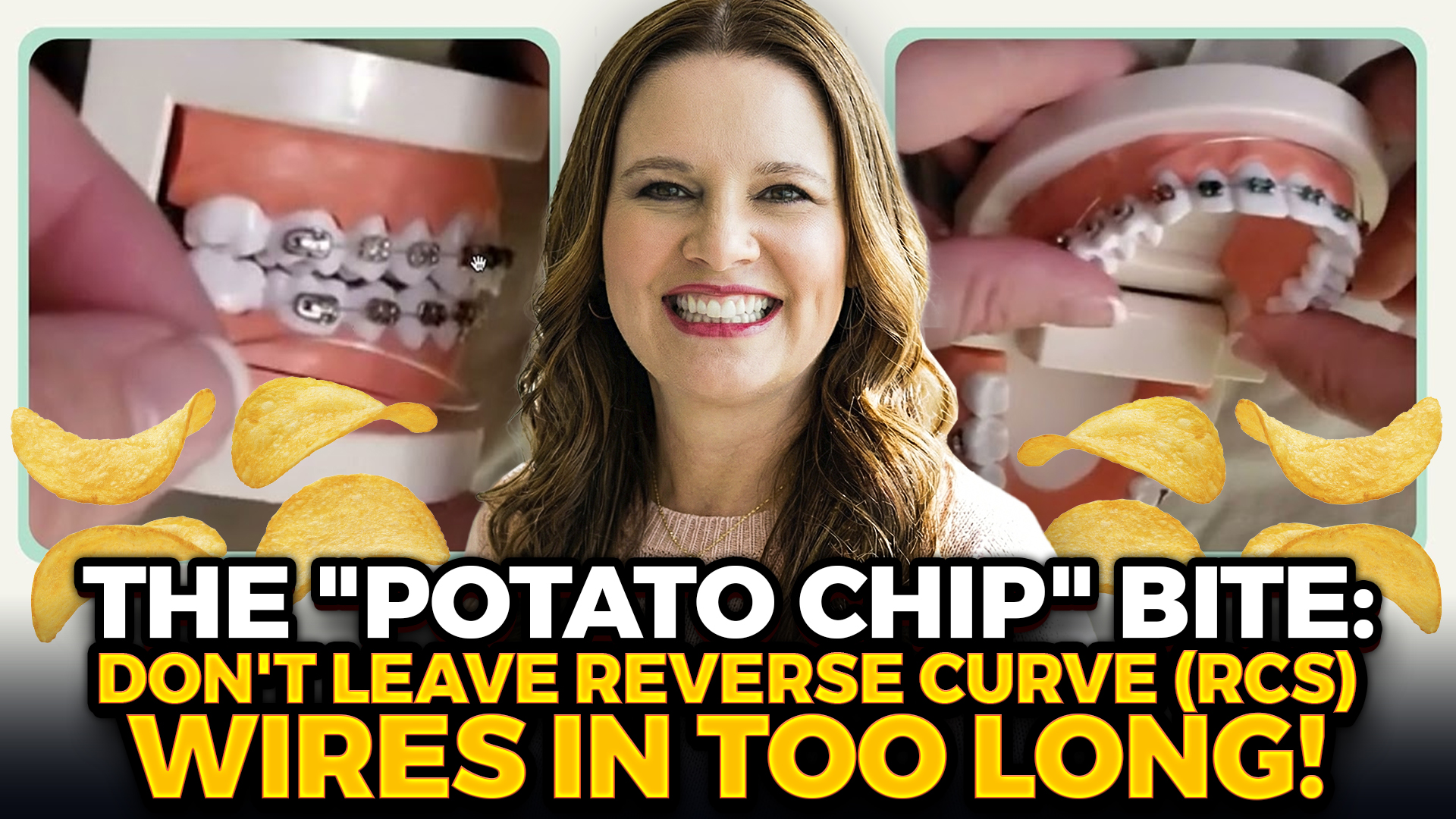
Reverse Curve of Spee (RCS) Wires: Clinical Dangers and Mechanics
Reverse Curve of Spee (RCS) archwires are highly efficient tools for opening deep bites, but they introduce severe clinical risks if left unmonitored. These specialized wires function by intruding the anterior teeth and molars while extruding the premolars. Alternatively, flipping the wire creates an Accentuated Curve of Spee (ACS), which is utilized to close open bites.
Because of the powerful forces involved, these wires should serve as a late-stage troubleshooting mechanism rather than a primary leveling solution. Clinicians should exhaust initial mechanics first, including leveling second molars, using box elastics, or placing anterior bite turbos.
Upper vs. Lower Arch Mechanics
Simultaneous dual-arch application is generally discouraged in deep bite cases. Utilizing upper and lower RCS wires concurrently often results in a severe posterior open bite at the molars.
- Lower RCS Wires: This is the standard protocol for deep bite correction. It levels the mandibular curve of Spee predictably. It is also highly effective for opening a bite briefly to unlock the occlusion when closing upper arch spaces.
- Upper RCS Wires: Upper application is rare but can be used strategically to intrude the maxillary incisors to correct a highly pronounced gummy smile.
The “Pringles Chip” Effect and Patient Tracking
Leaving an RCS wire in the mouth without strict observation can completely deform the dental arches. In severe instances of prolonged unmonitored wear, the arches can warp into extreme, three-dimensional distortions—resembling a potato chip. This is accompanied by massive buccal flare, severe dental malalignment, and centimetric posterior open bites that completely compromise masticatory function.
To prevent catastrophic arch tracking errors and severe legal liability, practices must implement strict protocols:
- Create Internal Alerts: Flag every patient chart immediately when an RCS wire is active.
- Strict Screening: Never place these wires in unreliable, flaky, or compliance-compromised patients.
- Rigid Recare Windows: Mandatory appointments must occur precisely at set intervals.
If an orthodontic patient misses an appointment while wearing an active RCS wire, the clinic must actively contact them to avoid permanent tissue damage and claims of patient abandonment.
For continuing orthodontic education or custom case consults, visit the StraightSmile Solutions Services Portal.