
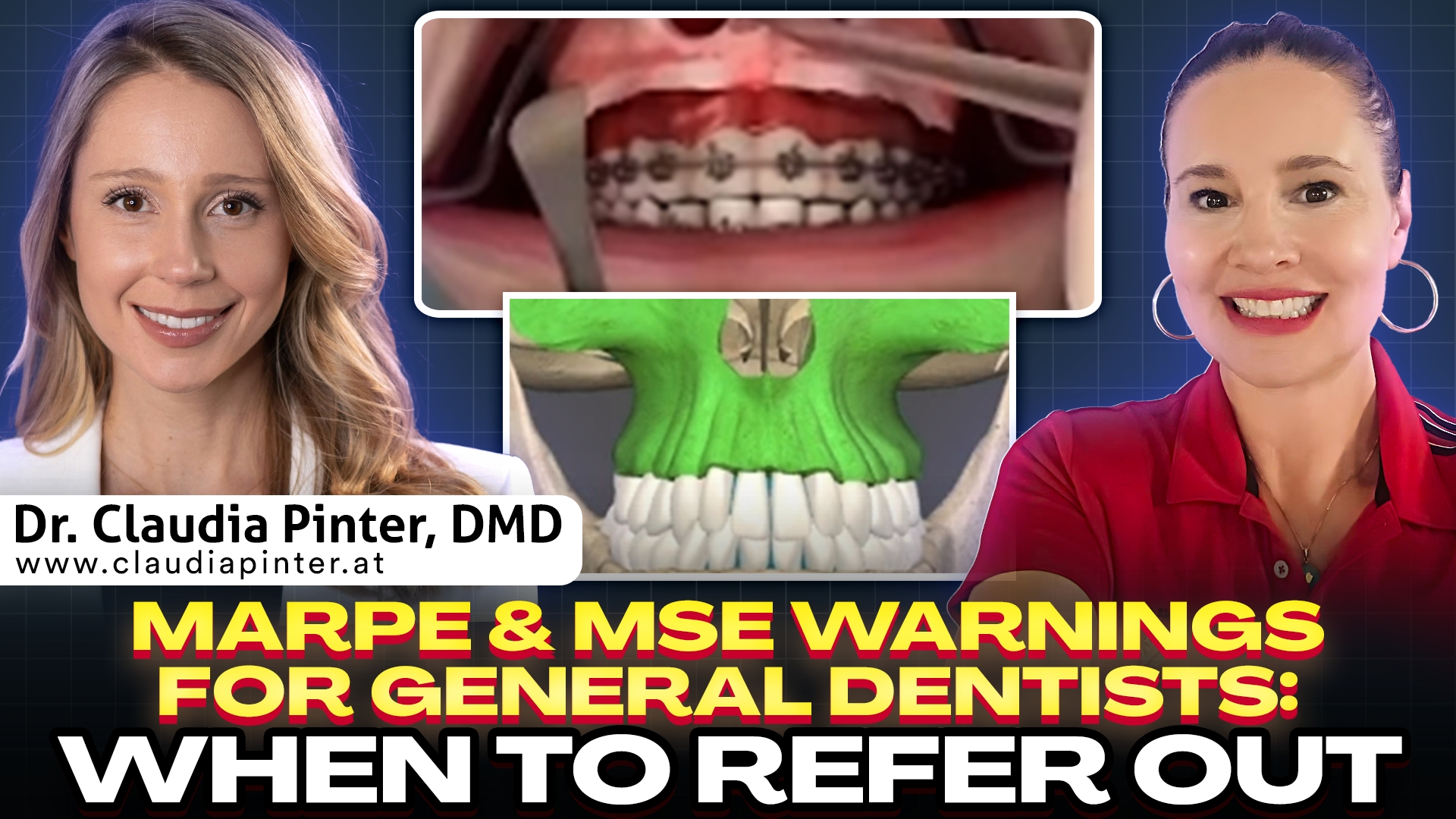
Reimagining Adult Maxillary Expansion: Aesthetics Meet Function with MARPE and MSE
For many adult dental patients, correcting a transverse deficient maxilla has historically felt like a bitter pill to swallow. Because the mid-palatal suture is completely fused in adults, traditional orthodontic treatments often relied on highly invasive, aggressive jaw surgeries like Le Fort I osteotomies. These surgical pathways are intimidating to patients and typically create a large, disfiguring gap between the front teeth during rapid expansion. Unsurprisingly, these aesthetic and physical concerns cause a vast majority of adult patients to reject treatment outright, even when they are fully aware of the long-term health benefits.
Fortunately, innovative protocols are shifting this paradigm by combining bone-borne anchorage with digital aligner therapy. Known as MARPE (Maxillary Skeletal Expansion) or Maxillary Skeletal Expander (MSE), this technique bypasses tooth-borne pressure entirely. By anchoring custom-made expanders directly into the palate using strategically placed mini-screws, clinicians can separate the maxillary halves with minimal surgical intervention rather than extensive, aggressive osteotomies.
The latest evolution of this process integrates clear aligners directly into the treatment sequence, allowing clinicians to hold the front teeth aligned while the underlying skeletal base widens. Instead of rapid daily turning protocols, patients utilize a customized, slow expansion schedule. This measured pace allows the teeth to move smoothly into the precise zones where new bone is actively forming, preserving aesthetics and preventing a massive diastema from start to finish.
Crucially, widening a narrow maxilla does more than fix a crossbite or create a beautiful smile. Because the roof of the mouth serves as the floor of the nasal cavity, skeletal expansion directly opens the nasal floor. This structural change increases pharyngeal airway volume, makes nasal breathing easier, and addresses the root causes of snoring or mouth-sleeping. By eliminating disfiguring gaps and intense surgeries, patient acceptance rates soar, allowing dental professionals to improve systemic patient health beyond the oral cavity.