
Orthodontist Reacts: The Mystery of the Unilateral Open Coil Spring
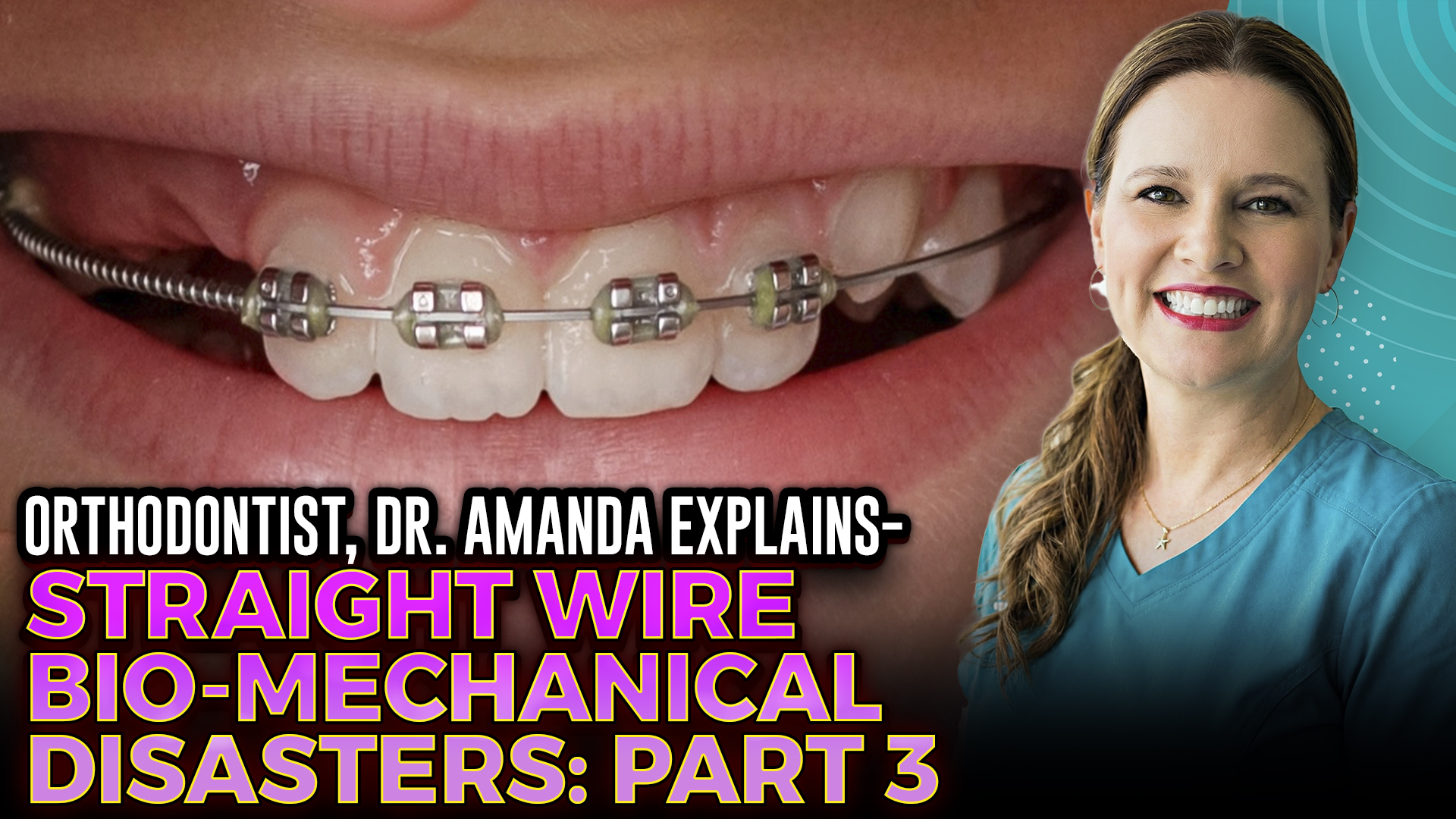
Stock photos of dental work are notorious for showcasing some truly bizarre treatment choices. In her latest breakdown video, Dr. Amanda from Straight Smile Solutions dives into a specific orthodontic image that has left professionals scratching their heads. While the setup isn’t completely terrible, the mechanical logic behind it is a massive biomechanics question mark.
At first glance, the setup gets a few things right. The clinician successfully leveled and aligned the sectional area first, and they correctly placed the open coil spring (OCS) on a heavy wire. However, that is where the good news ends. The image reveals a giant, active unilateral open coil spring that is noticeably bowing out.
Using a massive unilateral spring like this creates severe side effects. Because the spring is highly active, it naturally forces all the surrounding teeth over to the left side. The problem is that tooth number 11 (the upper left canine) hasn’t even erupted into the arch yet because there isn’t enough space. Pushing the teeth blindly creates a whole new structural issue on the opposite side of the mouth.
Before introducing a force this strong, an orthodontist must consider the patient’s facial midline, their unique bone structure, and their overall bite. Flaring everything forward without proper planning can easily throw the entire mouth out of alignment. Additionally, minor bracketing issues and mismatched mamelons suggest that this case was either mismanaged or taken completely out of context.
Unless this specific setup is part of a highly specialized Phase 1 interceptive treatment, using a massive active spring at this stage simply makes no clinical sense. It serves as a great reminder to general dentists that every single orthodontic force requires a clear, predictable purpose.