
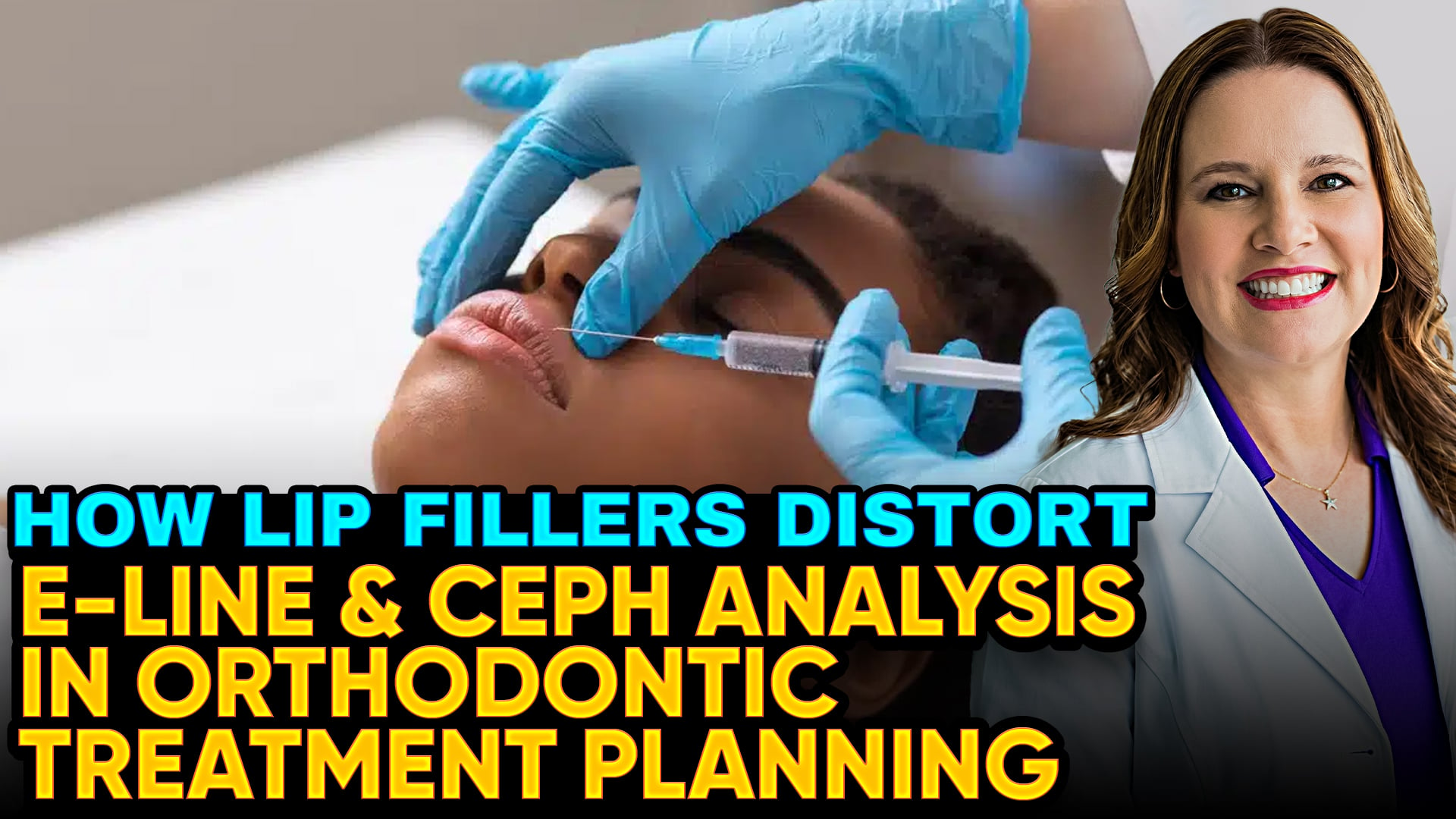
The rise of cosmetic injectables has introduced an unexpected variable into dental offices. For orthodontists and general dentists offering teeth-straightening treatments, lip fillers are becoming a critical factor to screen for during initial consultations.Traditionally, practitioners rely heavily on the facial E-line (Esthetic Line) and soft tissue profiles to guide their diagnosis. However, artificial volume from dermal fillers completely throws off these classic diagnostic metrics. When soft tissue measurements are artificially enhanced, relying solely on visual profiles can lead to drastic diagnostic errors. For instance, a patient might appear to have severe dental protrusion due to their full lips, tempting a doctor to plan for the extraction of four premolars to pull the teeth back.To prevent these errors, a comprehensive skeletal analysis is more critical than ever. Practitioners must rely on full-face cephalometric X-rays and traditional skeletal analysis methods—such as Steiner or SUNY—rather than the integrated soft-tissue visuals found in digital aligner software. Analyzing the underlying hard tissue and the actual inclination of the incisors provides the true picture. If the incisors are upright but the soft tissue profile is unusually prominent, temporary dermal fillers are the likely cause.Because lip fillers typically degrade and wear off in less than a year, permanent orthodontic changes should never be designed around temporary cosmetic adjustments. Interestingly, proper orthodontic alignment that flares retroclined incisors can actually provide natural, permanent lip support. In many cases, a well-executed orthodontic treatment plan can completely eliminate a patient’s perceived need for lip fillers in the first place. Clinicians must add questions about recent cosmetic injectables to their medical history forms to ensure they are treating the true skeletal structure, not a temporary aesthetic trend.