
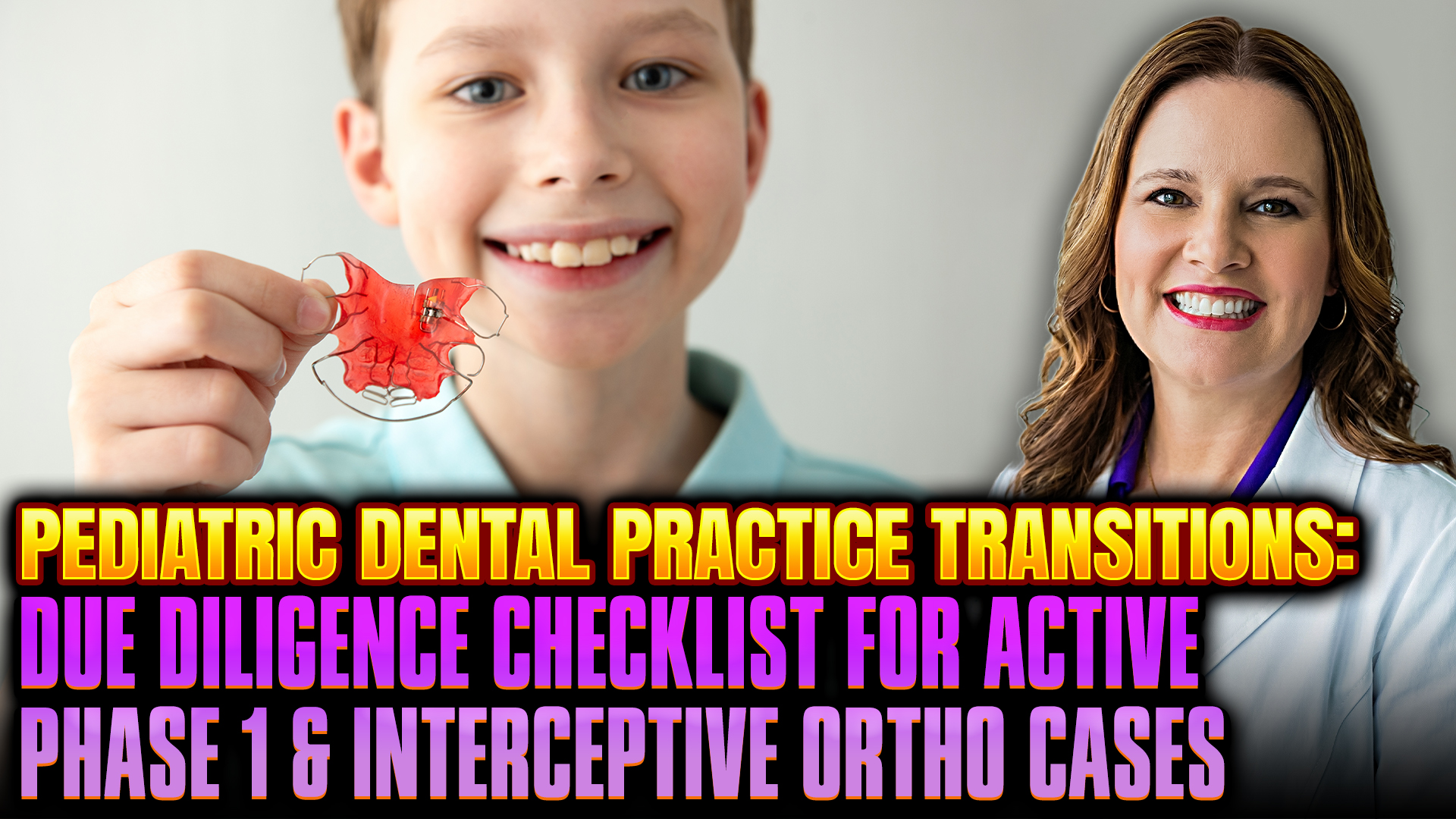
When purchasing a pediatric dental practice, buying an existing patient base often means inheriting mid-treatment orthodontic cases. With more pediatric dentists performing Phase 1 interceptive orthodontics, expansion, and early aligner therapy, performing a meticulous clinical audit before closing the deal is essential.
First, determine if the practice uses “bread and butter” orthodontic appliances or highly proprietary systems. Proprietary systems often require expensive training or system enrollment fees for a new owner. Relying on literal, generic braces and standard local labs is significantly more cost-effective and flexible.
Second, look closely into the financials and clinical liabilities of active cases. You must understand where the practice stands regarding lab fees, remaining chair time, and unearned income. If an inherited case requires excessive chair time at a financial loss, it should reduce the practice’s final purchase price. Conversely, a well-managed pool of active cases represents immediate unearned income potential.
Finally, require a full set of progress records for every active patient. If a patient does not have updated progress records, do not accept them into your practice without a strict transition plan. Patients should be given 30 to 90 days’ notice of the transition to come in for fresh records, ensuring your liability is fully protected from day one.