
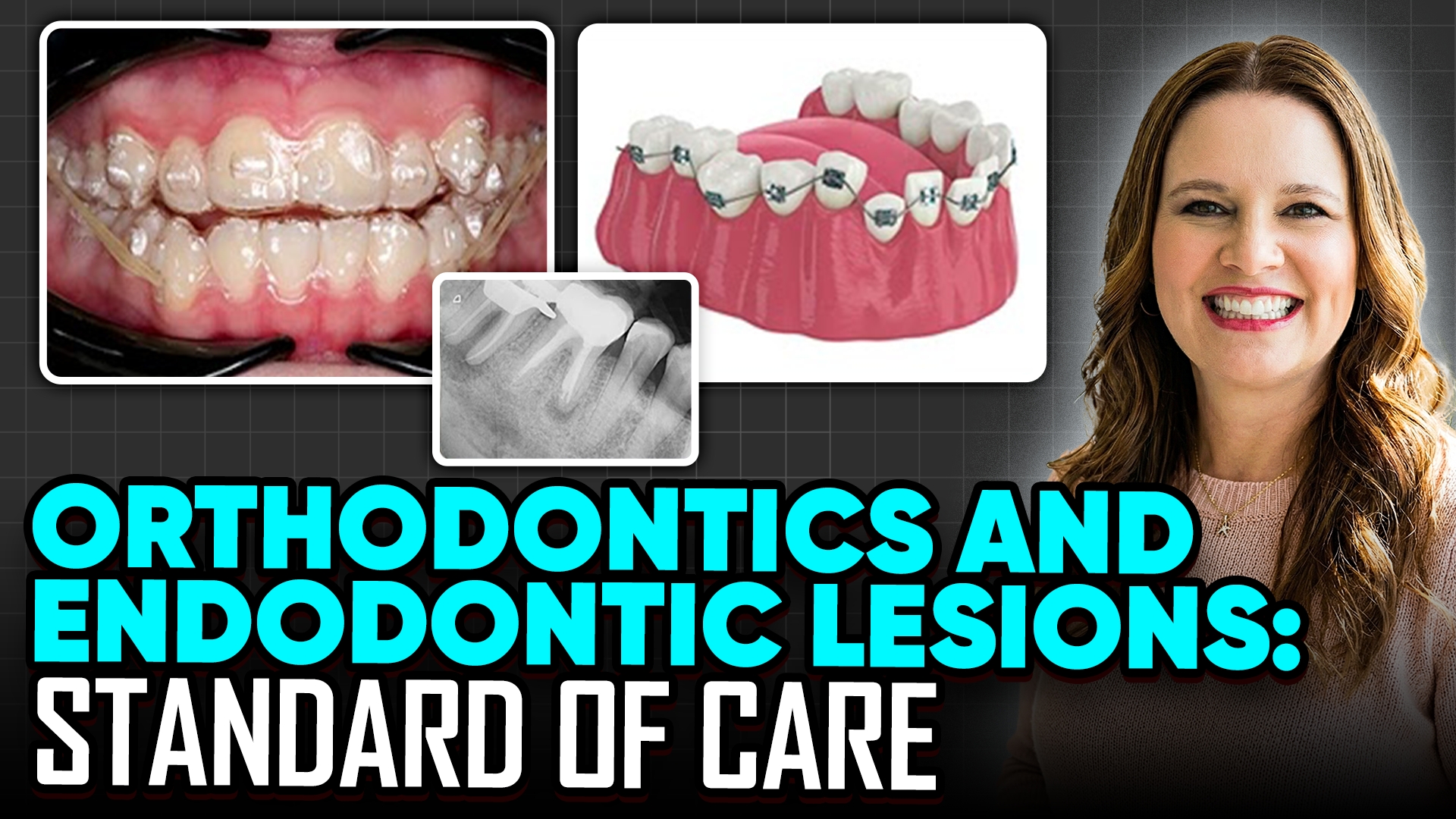
Navigating Endodontic Lesions and Orthodontic Treatment
What should you do when you discover an endodontic lesion right before starting orthodontics, or worse, right in the middle of active treatment?
The short answer is simple: it depends entirely on what the endodontist says. As clinicians, we must strictly adhere to the standard of care. This means performing a comprehensive oral health workup, reviewing a panoramic X-ray, and obtaining a clear clearance from the general practitioner (GP) confirming no active decay, periodontal issues, or endodontic pathology before any brackets are placed or aligners are delivered.
If you spot pathology or deep decay on a pre-treatment scan, always punt that patient back to their GP or an endodontist for formal evaluation. Never rush into treatment just because a patient is eager to start. Moving an infected or compromised tooth significantly increases the risk of the condition blowing up, causing severe bone loss, damaging adjacent teeth, or even leading to tooth loss.
If an endodontist evaluates an active, monitored lesion and clears the patient for orthodontics, ensure you get that clearance, risk acceptance, and liability waiver in writing. In these rare cases, clear aligners are often a much safer bet than traditional braces. Aligners allow you to completely lock and passive-ize the compromised tooth while safely moving the rest of the arch, minimizing unwanted force on the lesion.
To prevent surprises, ensure patients continue their routine six-month cleanings with their GP and take annual orthodontic progress X-rays. Prioritizing foundational dental health over a rushed timeline is the only way to safeguard your patients and your practice.