
 Navigating Ectopic Eruption in Early Orthodontics
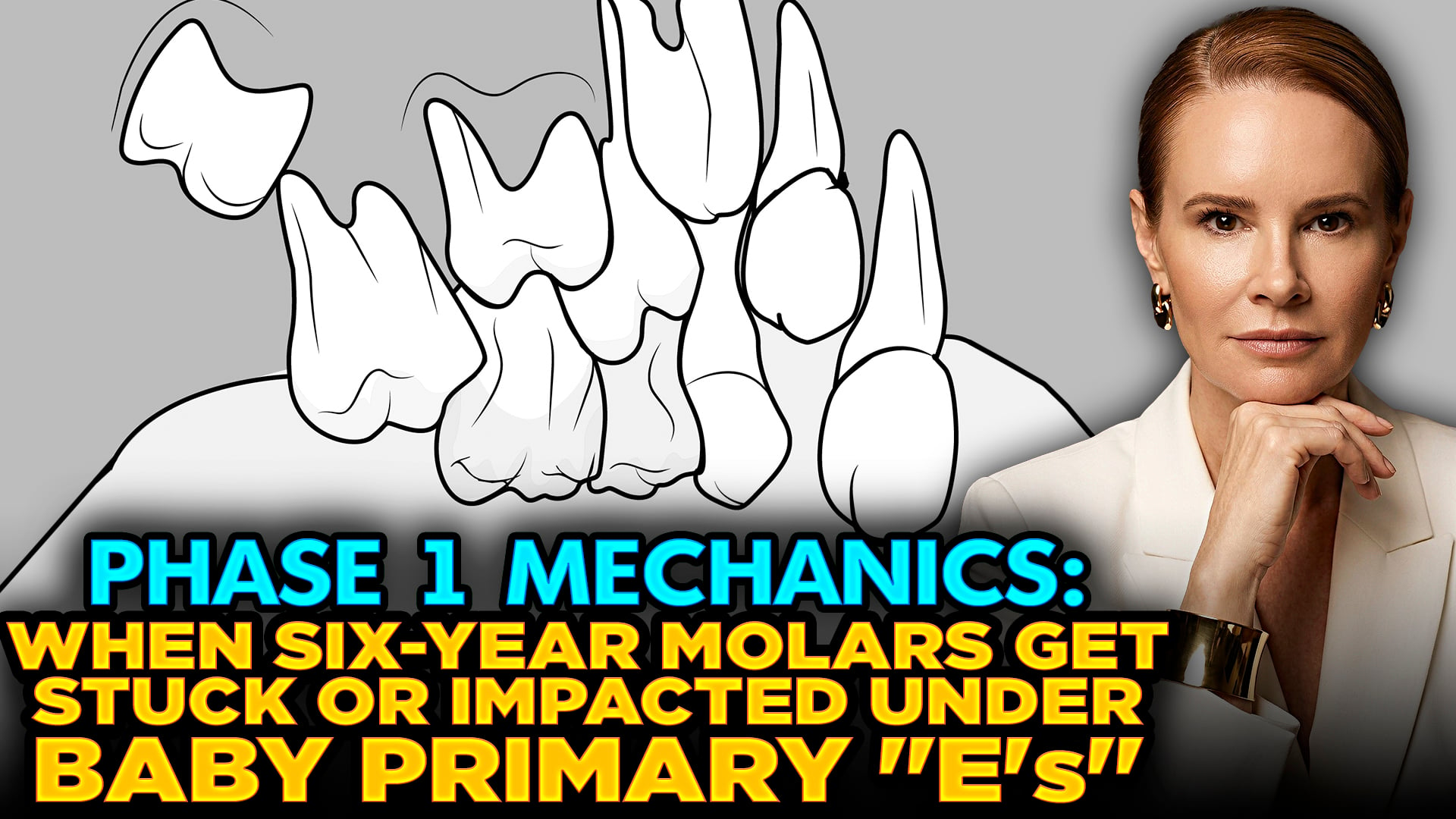
When a permanent first molar begins to erupt, it occasionally encounters an obstacle that disrupts its natural path. In pediatric dentistry, a common hurdle occurs when this new permanent tooth gets physically caught on the height of contour of the adjacent primary second molar. This specific impaction can lead to premature root resorption of the baby tooth or complete blockage of the permanent molar if left unaddressed. Recognizing this alignment issue early is essential for preventing long-term structural complications in a growing smile.
Successfully correcting a trapped molar depends heavily on treatment timing and available anchorage. Orthodontic movement relies on Newton’s law of equal and opposite reactions, meaning the provider needs stable structures to push against to move the permanent tooth backward. If the condition is detected during early childhood, a simple spacer technique is often highly effective. However, if intervention is delayed, the surrounding primary teeth may begin to loosen naturally. This creates a challenging situation where there are no longer enough secure teeth to anchor the braces or clear aligners.
Clinical sequencing must also be carefully planned when multiple orthodontic goals exist. For instance, parents or providers might want to introduce a palatal expander immediately to address airway concerns or a narrow palate. However, an expander cannot be properly anchored to a molar that remains trapped or incorrectly angled. The impacted permanent tooth must first be uprighted and guided into its proper position before secondary appliances can be utilized. Prioritizing the correction of the eruption path ensures a stable foundation for any future structural expansion.