
Navigating CBCT Interpretations: The Case for Outsourcing OMFR Reports
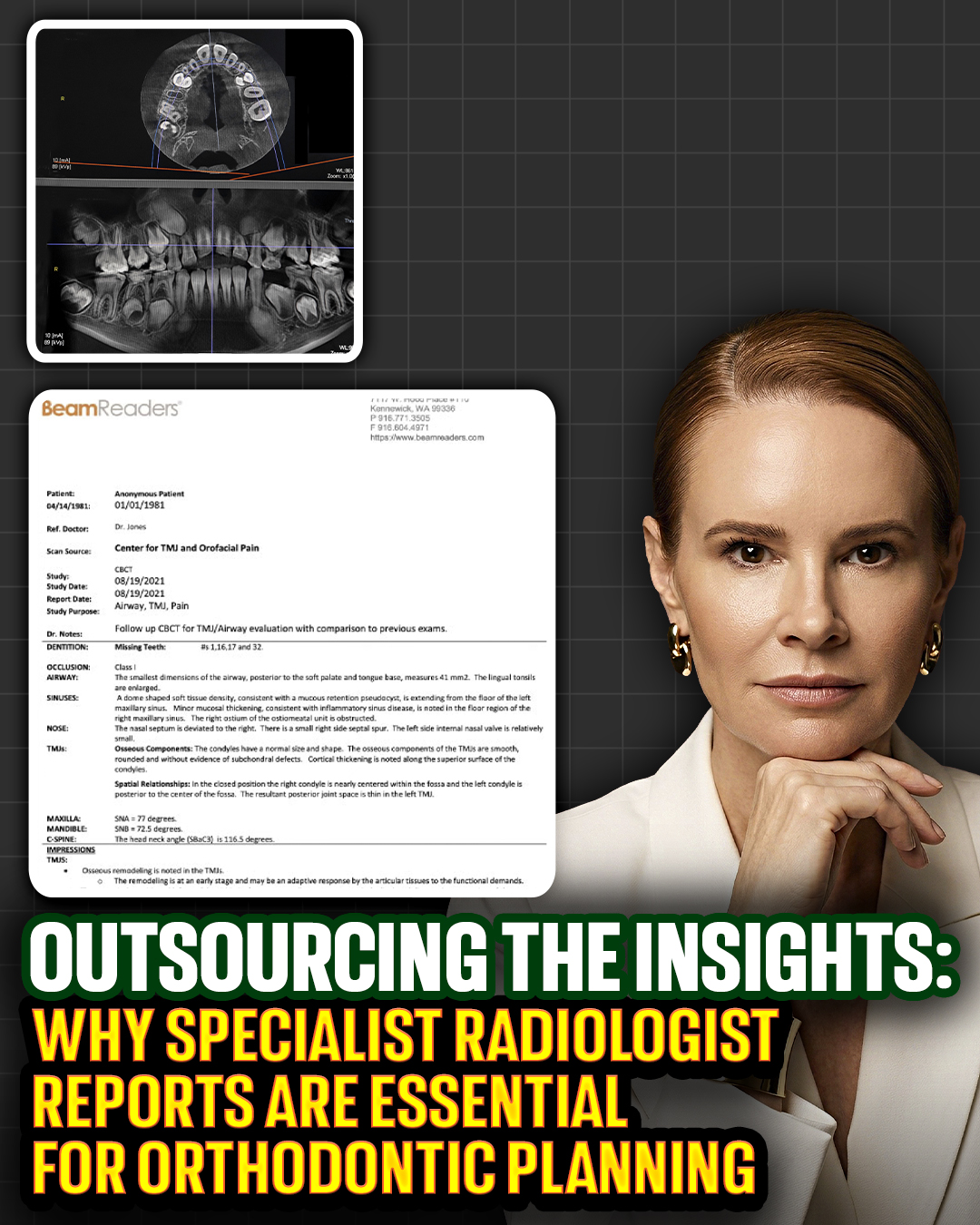
Purchasing a Cone Beam Computed Tomography (CBCT) machine is a major milestone for any dental practice. However, this advanced technology comes with a significant legal burden. The standard of care in the United States requires you to interpret and diagnose everything captured within the field of view. If a patient’s scan shows a sinus pathology or an issue outside your usual scope of dentistry, you are still fully responsible for recognizing it.
To protect their practices, many dentists turn to Oral and Maxillofacial Radiologists (OMFRs) to double-check their scans. Third-party reporting companies have historically provided a crucial safety net. Yet, relying on these services is becoming more complex. Many providers now heavily utilize AI tools, shifting the burden onto the dentist to write highly detailed prompts to get a thorough report back.
To get the best results, doctors must customize their screening templates. Pediatric scans should focus heavily on airway volume, functional habit markers, and eruption paths. Meanwhile, adult scans require a closer look at alveolar bone boundaries, cortical plates, and TMJ degradation.
The financial reality of this medicalization presents another hurdle. While you can bill patients for an external OMFR report, some will decline the added cost. Dentists are then left facing a difficult choice: do they accept the liability risk themselves, or lose the patient to a competitor down the road who is willing to take it?
Ultimately, outsourcing your CBCT reports remains a vital strategy for risk management. However, finding a respectful, high-quality partner who balances advanced technology with genuine expertise is essential to keeping your practice both compliant and profitable.