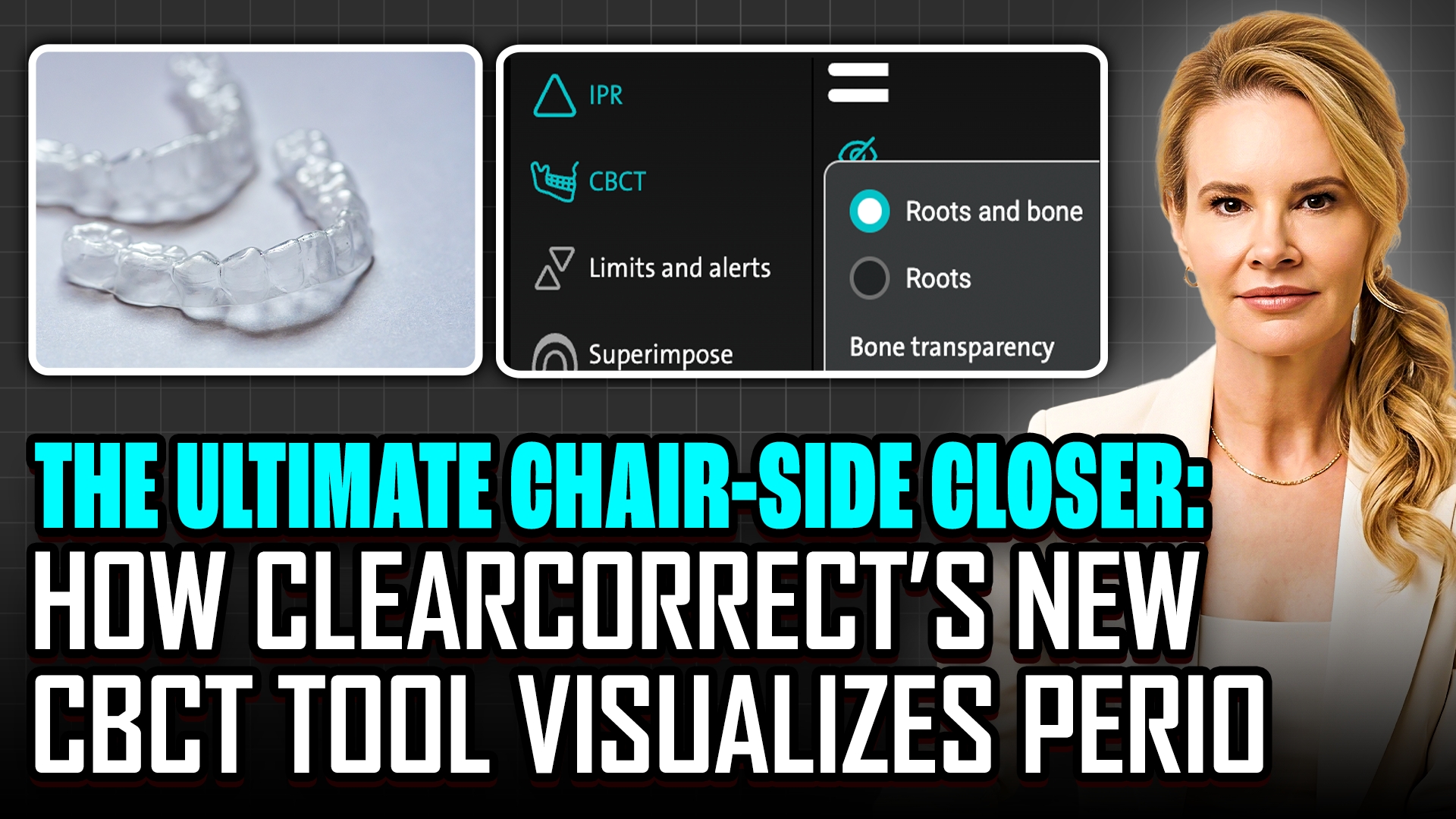
The intersection of cone beam computed tomography and clear aligner therapy has changed how practitioners plan orthodontic cases. Recently, ClearCorrect introduced an integration feature designed to help clinicians spot fenestrations and protect periodontal health. While this metric is a win for doctors, the execution comes with distinct procedural quirks.
The Extra Step for Bony Insight
Unlike systems where bone tracking displays by default, this feature requires a deliberate manual step. Clinicians must navigate the software interface, select the specific imaging toggle, and prompt the system to render the bone data.
Because doctors manage numerous cases, remembering which specific patients have this data attached can lead to oversight. Reversing this requirement so bone housing shows up automatically would prevent doctors from missing critical biological boundaries.
Analyzing the Software Display
While the biological data itself appears accurate, the visual user interface leaves room for improvement. Top-tier competitors use bright, obvious color-coding to signal when a tooth roots out of the bone, creating an educational visual aid for teams and patients.
The current interface lacks those immediate visual warnings. The graphics serve as a functional reference tool for the doctor rather than an easily digestible presentation for a patient consultation. Because the display requires translation from the doctor to the patient, it lacks immediate educational impact.
Protecting the Periodontium
Despite interface challenges, evaluating roots within the bone remains critical. Whether dealing with a crowded case where expansion is pushed too wide or reviewing a retreatment patient who started outside the bony housing, keeping teeth tucked in the biological boundary is crucial.
This feature allows doctors to reevaluate treatment halfway through if things look unusual, adjust the plan, and pull the roots back into the safety zone. Utilizing this tool helps general dentists avoid dangerous periodontal complications.