
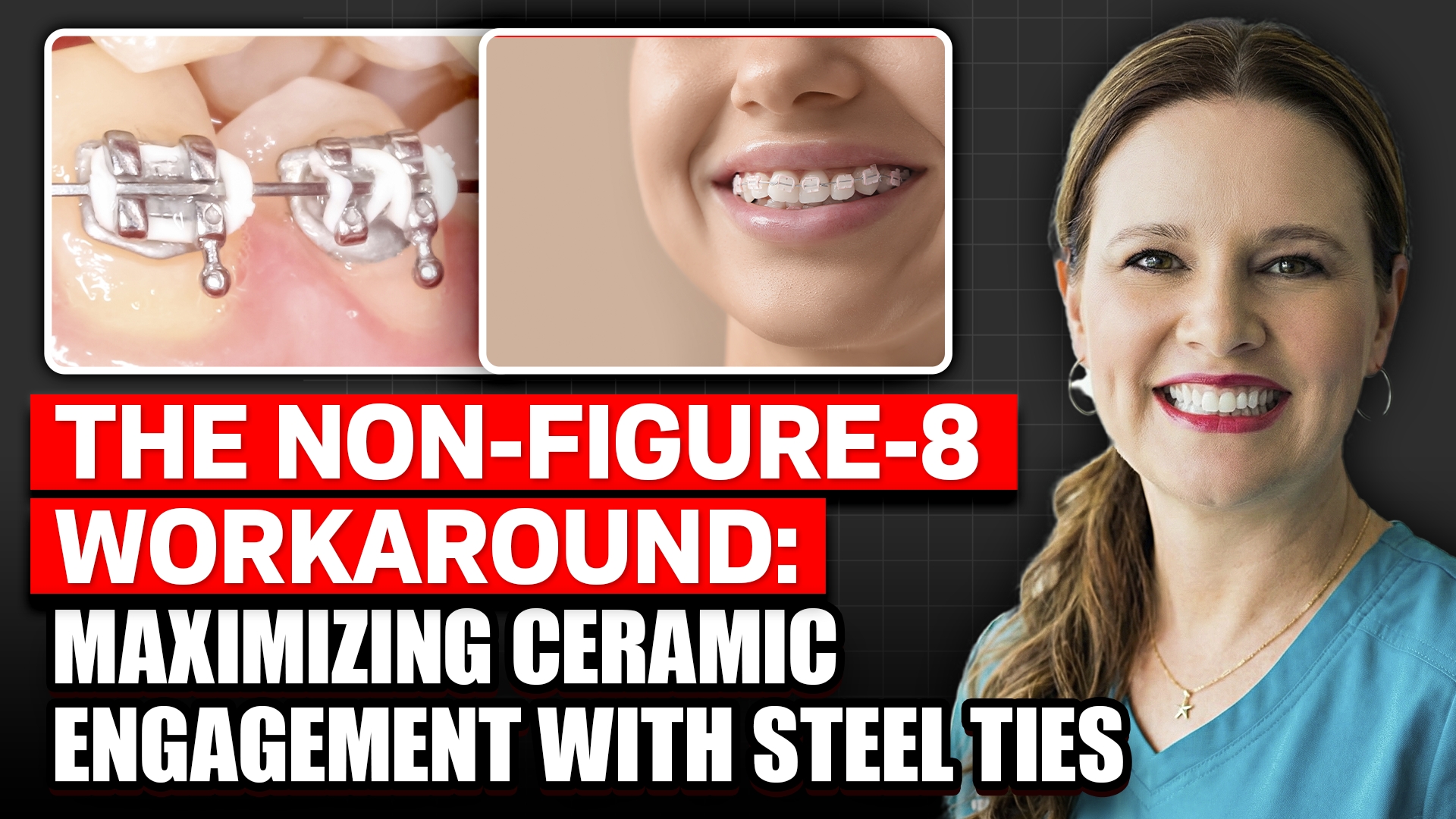
In orthodontic treatment, getting an active archwire fully seated into the bracket slot can sometimes feel like an uphill battle. A common roadblock occurs when a wire is simply too heavy for the required deflection. For instance, attempting to force a thick rectangular wire into a crowded slot often leaves the wire deflected and poorly engaged, even when using a standard figure-eight tie. When the ligature cannot fully push the wire down, the mechanics stall out, and tracking stops.
To overcome this issue, clinicians can shift their workflow toward a highly effective workaround. The first step involves bumping down the archwire size to a lighter, more flexible option, such as a 12 or 14 wire. Once the lighter wire is in place, the true magic lies in substituting standard elastic modules with stainless steel ligatures.
Applying steel ties directly over the archwire provides rigid, unyielding engagement that completely seats the wire into the slot. Unlike elastic ties that degrade and lose their force within weeks, steel ties stay fully active for months. This allows for long-term, continuous tooth movement and fewer emergency appointments.
For patients wearing aesthetic ceramic brackets, there is an extra step to maintain a clean look. Because steel ties leave visible pigtails and metallic elements, clinicians can place white or clear O-rings directly on top of the steel ligatures. While these superficial elastics are purely decorative and prone to staining, they successfully mask the underlying metalwork. This brilliant combination balances superior biomechanics with the cosmetic tracking demands of the patient, ensuring orthodontic cases finish beautifully and efficiently.