
 Mastering the Art of Braces Bonding: Avoid the “Glue Blob” Pitfall
Perfect bracket placement is the backbone of successful orthodontic treatment. While standard dental courses teach how to center brackets on the clinical crown, freehand bonding introduces common workflow pitfalls that can quietly derail your outcomes.
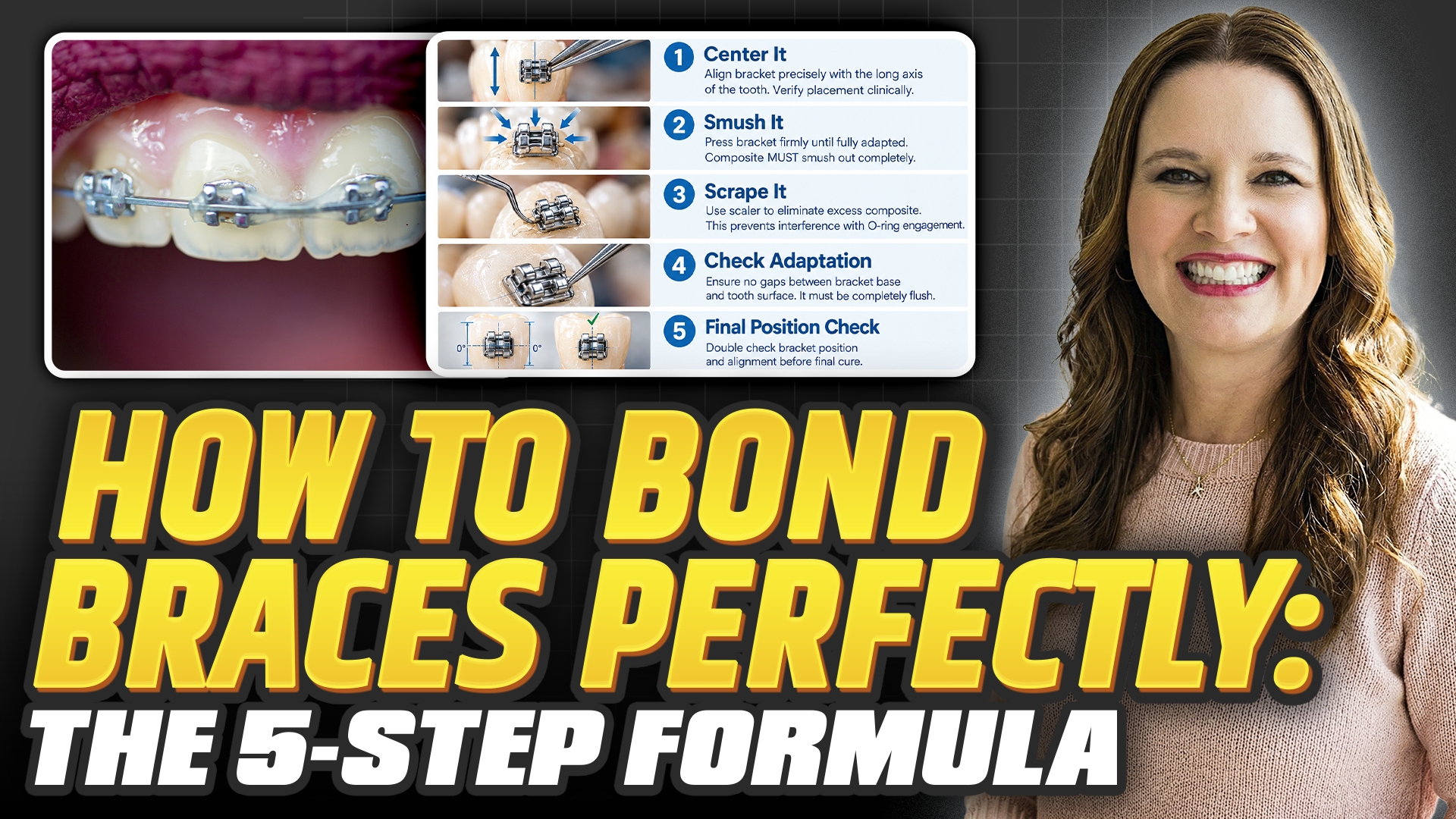
The most frequent culprit behind poorly aligned teeth isn’t misalignment—it is the thickness of the adhesive. When you apply too much composite, a “glue blob” forms beneath the bracket. Failing to firmly press down and “smush” the bracket causes the excess adhesive to alter the built-in prescription. This unintended thickness can accidentally intrude, rotate, or alter the torque of the tooth. Furthermore, excess flash oozing over the wings blocks your ability to tie on wires properly.
To solve this, execute a precise workflow: position the bracket, press it down firmly to eliminate excess thickness, scrape away the flash with an explorer, and perform a final position check before curing. Cleaning flash can accidentally shift the bracket, making a secondary check essential.
If an error slips by, catch it as early as possible. Leaving a bracket improperly seated can add months to your treatment timeline, forcing you to regress to early leveling wires later on. Routinely double-check your work at every visit to keep your cases running efficiently.