
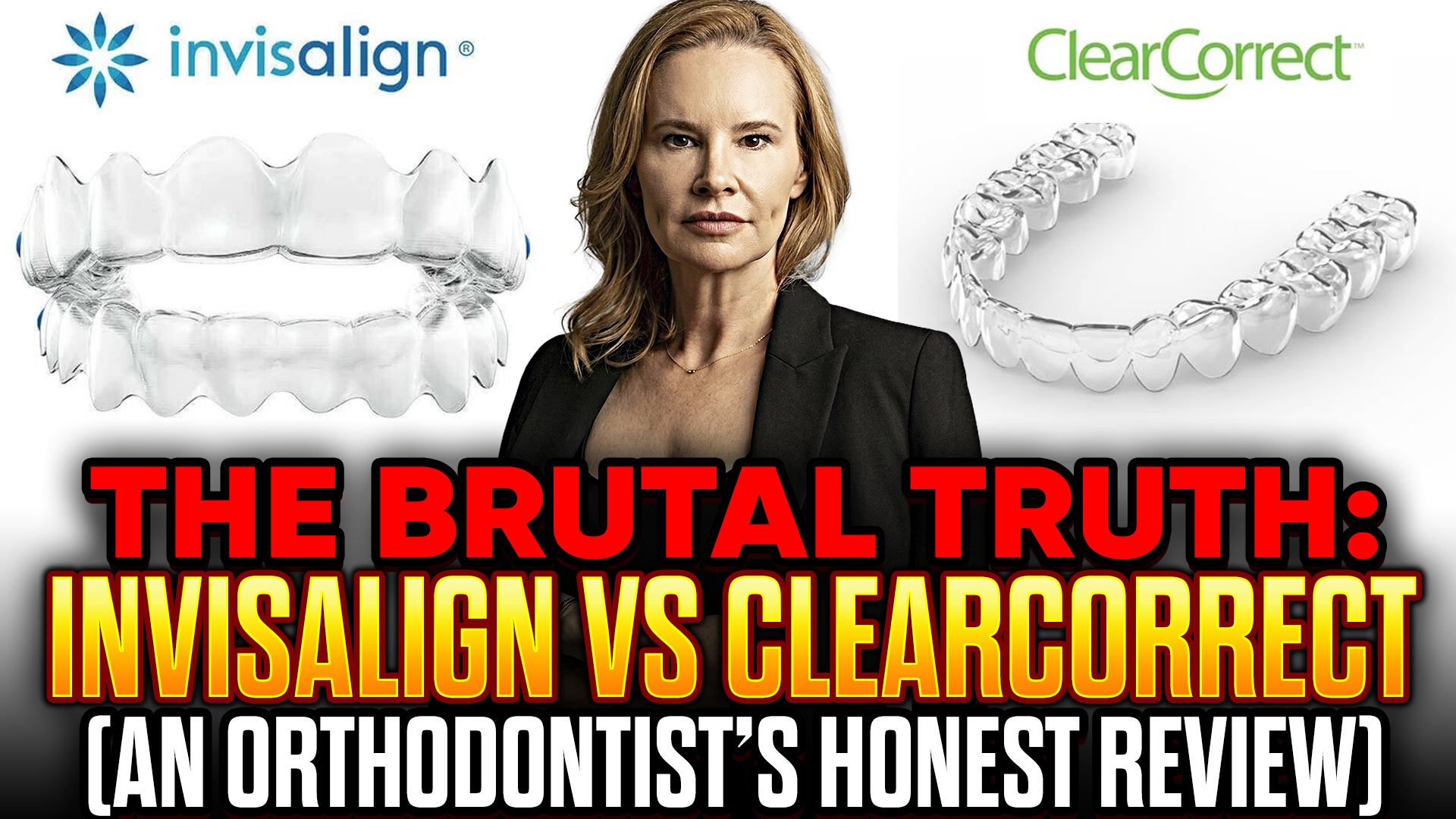
As a general or pediatric dentist, one of the questions you will face almost daily from both patients and peers is how Invisalign stacks up against ClearCorrect and the hundreds of other alternative clear aligner brands popping up across the globe. While it can be tempting to focus purely on the lab fees, selecting the right clear aligner brand requires a deeper look at the actual clinical features, physical materials, and overall value.
When you evaluate Invisalign and ClearCorrect side-by-side, the physical differences are immediate. ClearCorrect aligners utilize a significantly more rigid plastic material, and the trim line is cut differently than Invisalign’s scalloped approach. Rigidity and trim lines are not inherently superior or inferior; rather, they present unique pros and cons depending on the specific biomechanical objectives of your case.
Beyond the base materials, the software capabilities and automated features differ. Invisalign offers built-in precision cuts directly from the factory, which allow you to easily attach rubber bands for complex movements. With ClearCorrect, you can still use elastics, but you have to manually cut the aligners yourself, adding a layer of clinical hassle. Invisalign also features highly customized, branded attachment shapes tailored for specific tooth movements, whereas ClearCorrect offers a slightly more simplified, traditional template.
However, ClearCorrect shines in its cost-efficiency features for the provider. They include free retainers for the dentist at the end of treatment, which represents a massive direct value that you would otherwise have to absorb or purchase as an add-on with Invisalign. For a straightforward, middle-of-the-road case, you can comfortably utilize a more generic aligner brand, save significantly on lab fees, and pass those savings directly onto your patient. But if you encounter a highly complex or challenging case, going cheap will backfire. Understanding your specific case complexity and matching it to the right aligner brand is the true key to clinical predictability.