
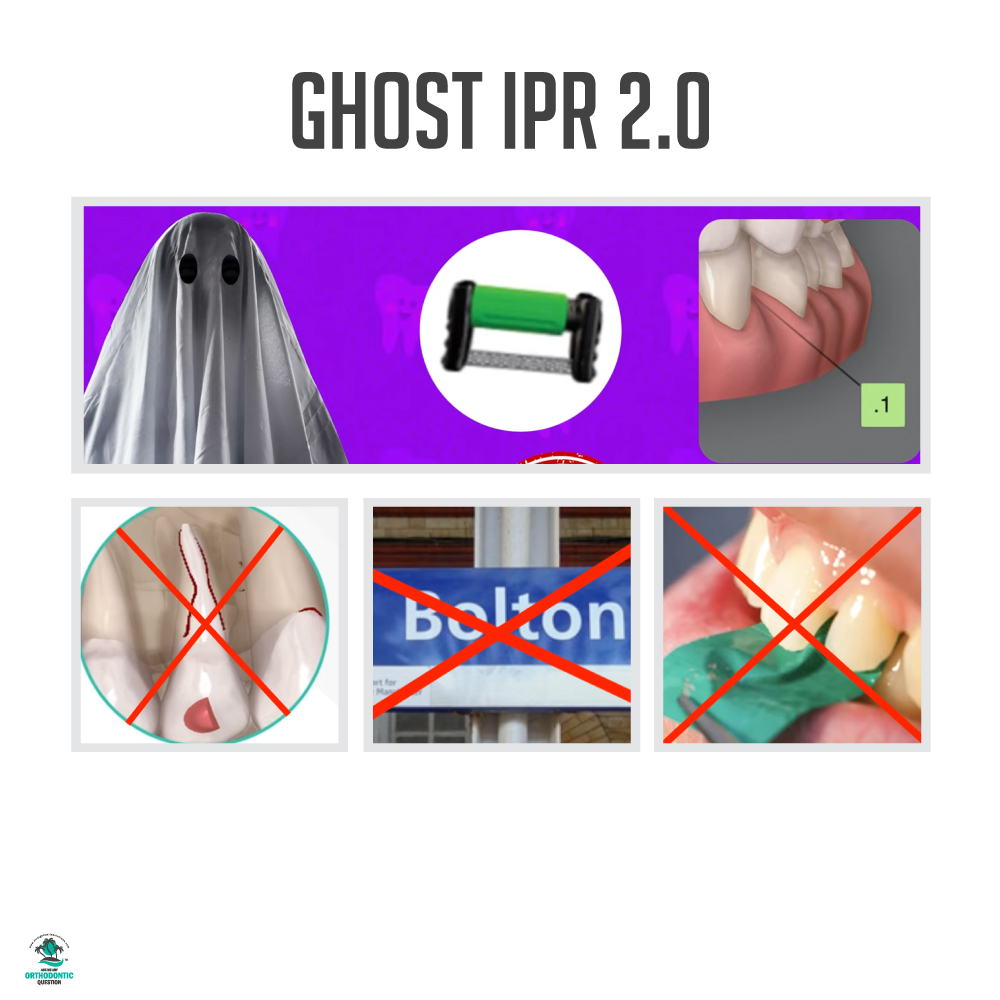
 Ghost IPR 2.0
I. Introduction
Dr. Amanda clarifies the concept of “ghost interproximal reduction” (IPR) in Invisalign treatment planning. She explains that ghost IPR refers to virtual IPR added to refine slight open contacts at the end of treatment when everything else in the case is perfectly aligned. Dr. Amanda emphasizes that ghost IPR should only be used as a “quick fix” for minor issues, not to address major tooth size discrepancies, crowding, or anterior contacts. She outlines the exact workflow for when ghost IPR is indicated, stressing the importance of addressing all other alignment and occlusal issues before considering this final detail refinement of light contacts with a few final aligners.
II. Reasons for IPR
- Tooth science discrepancies
- Mandibular Bolton as a common reason
- Alternatives to IPR: Veneers or fills on small teeth
- Importance of CBCT in treatment planning
- Utilizing CBCT function for miraculous insights
- Old school methods if CBCT is unavailable
III. Top Three Reasons for IPR
- Bolton discrepancies
- Addressing anterior contacts
- The necessity of IPR in certain cases
IV. Ghost IPR Defined
- Introduction to Ghost IPR
- Differentiating Ghost IPR from conventional IPR
- Clarifying Invisalign’s lack of recognition of the term
V. Straight Smile Solutions Debond Workflow Form
- Emphasizing the importance of the workflow form
- Availability through the YouTube channel
- Membership perks and generous sharing of resources
VI. Conditions for Ghost IPR Application
- 99.99999% completion of the treatment
- Ensuring teeth are perfectly aligned
- Bite settled, three points of occlusion on molars, two points on premolars
- Ghost IPR as a final touch
- Tightening up random open contacts
- Ideal circumstances for Ghost IPR application
VII. Identifying Contacts for Ghost IPR
- Charting and flossing technique
- Marking light contacts
- Using Leaf gauges and IPR gauges for measurement
VIII. Virtual Power Chain (VPC) Considerations
- The role of VPC in refining treatment
- Using VPC sparingly
- Caution on potential crowding issues
IX. ClinCheck Verification
- Verifying open contacts in ClinCheck
- ClinCheck’s role in detecting open contacts
- Decision-making based on ClinCheck results
X. Ghost IPR Request Process
- Requesting Ghost IPR subtly
- Seeking 0.1-millimeter IPR on specific sites
- The discretion of Ghost IPR application
XI. Conclusion
Through her website, StraightSmile Solutions, Dr. Amanda offers valuable insights on orthodontic procedures like Ghost IPR. Her thorough explanations emphasize the importance of traditional IPR, cautioning against confusion with virtual or Ghost IPR. Watch her previous videos to ensure a comprehensive understanding. Dr. Amanda advocates for meticulous case evaluation, recommending Ghost IPR only when the bite is settled, occlusion points are optimal, and all other aspects are perfected. Her guidance, rooted in practical experience, demonstrates a commitment to achieving ideal results and maintaining long-term dental health.