
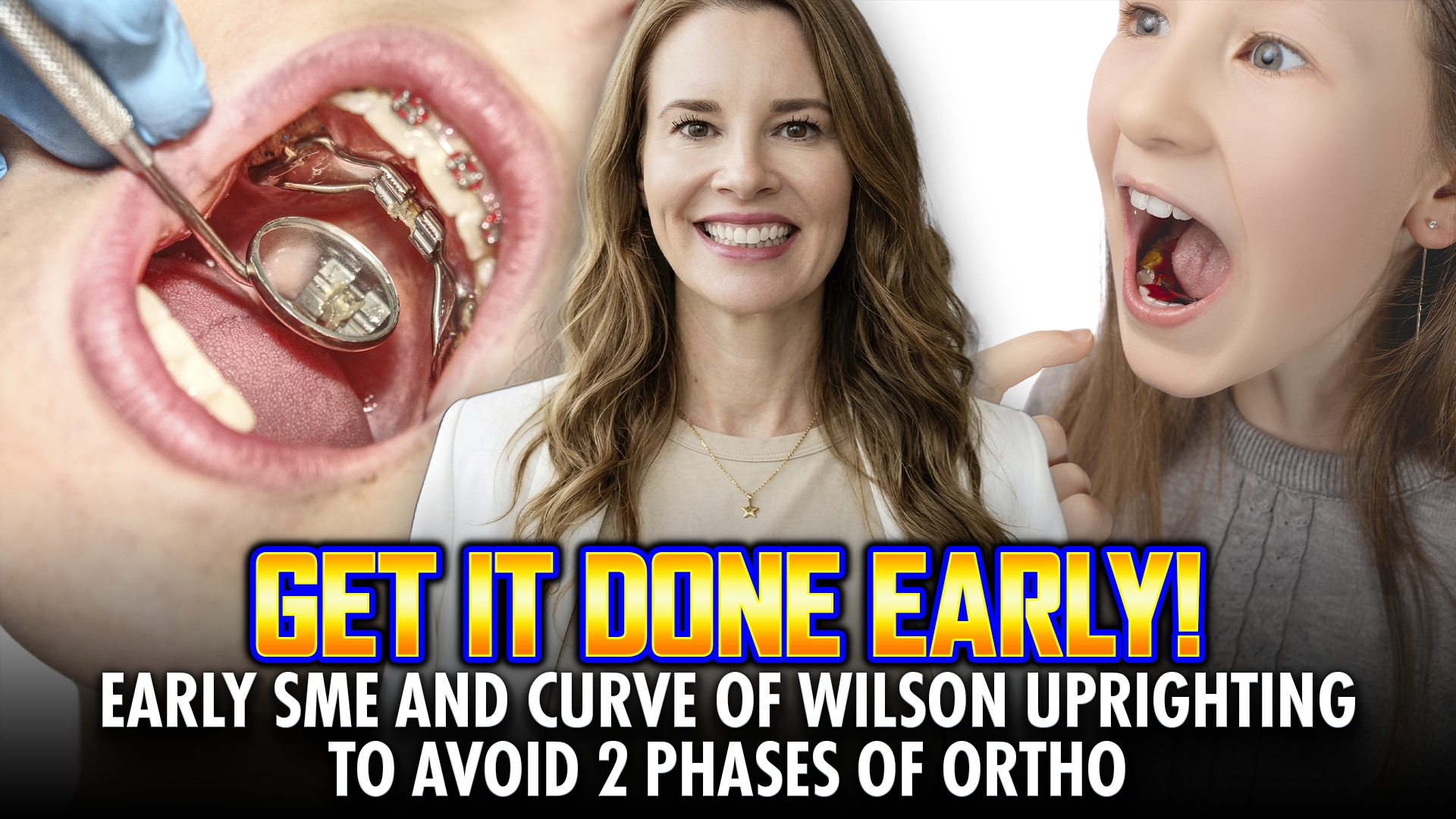
In a recent educational presentation by Straight Smile Solutions, orthodontist Dr. Amanda Wilson discusses interceptive techniques using slow maxillary expansion (SME) combined with lower arch uprighting to potentially eliminate the need for traditional two-phase orthodontic treatment. Dr. Wilson outlines why she strongly prefers early, slow palatal expansion over rapid maxillary expansion (RME), noting that slow expansion causes significantly less patient discomfort, minimizes facial asymmetries, and allows bone to fill in naturally without creating large, dramatic gaps between the front teeth. She emphasizes that while legacy, insurance-driven business models often restrict coverage to a single treatment phase later in adolescence, practicing interceptive care at a very young age—specifically between six and eight years old—yields optimal skeletal remodeling and much better physiological development.
Parents are encouraged to evaluate their child’s early dental width using a simple visual gauge: a healthy primary dentition should feature roughly a millimeter of spacing, equivalent to the thickness of a nickel, between each of the front baby teeth to accommodate permanent tooth eruption safely.A critical component of this interceptive treatment protocol is addressing the mandibular arch simultaneously by uprighting the lower dentition along the curve of Wilson. Dr. Wilson points out that many practitioners mistakenly focus solely on upper palatal expansion, but failing to correct lingually rolled lower molars prevents the upper arch from gaining sufficient, stable width. While standalone slow expanders are highly effective, they primarily widen the posterior area and can create a triangular shape if not paired with early phase-one braces or clear aligners to properly remodel the bone near the permanent canines. Though doctors cannot guarantee an absolute cure-all, starting this comprehensive dual-arch leveling early in the mixed dentition maximizes the statistical likelihood that a child will avoid massive, expensive teen orthodontic treatments, frequently saving families thousands of dollars in future healthcare costs.