
Don’t Trust AI: Double Check Aligner Tracking and Tooth Morphology
When treating adult orthodontic patients with clear aligners, relying entirely on automated software set-ups can lead to unexpected and frustrating results. While artificial intelligence and digital technicians do a remarkable job of roughing out tooth movement, they cannot fully account for individual tooth morphology, historical attrition, and wear facets.
In adult patients, years of chewing and grinding often lead to significant attrition. As incisal edges wear down over time, the teeth naturally become shorter and structurally thicker at the remaining edge. Furthermore, natural anatomical variations mean that lower central and lateral incisors frequently possess completely different thicknesses, curves, and shapes.
When digital setups attempt to align these uneven or worn teeth, the software often lines up the labial or facial surfaces perfectly. However, looking at the teeth from a lingual or incisal perspective reveals a highly uneven or jagged appearance due to differences in tooth thickness. Patients might feel these discrepancies with their tongue or notice the unaligned incisal edges and assume their teeth are not straight.
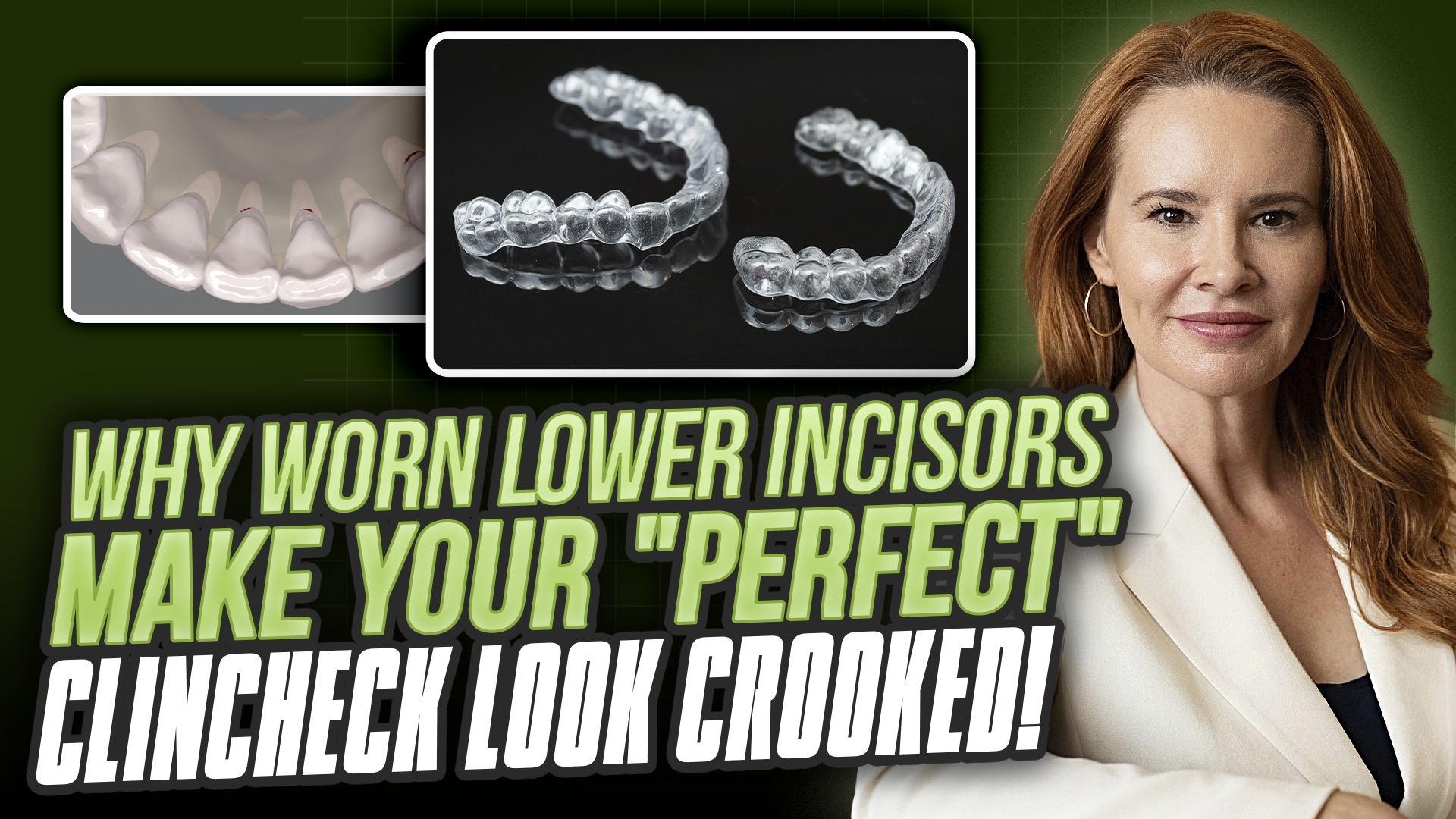
To prevent these misunderstandings, doctors must carefully review every digital treatment plan rather than accepting the initial automated proposal. If significant wear or uneven morphology is present, the situation must be discussed with the patient before finalizing the plan. Clinicians can present the choice of either accepting the functional alignment as-is or opting to intrude the worn teeth to rebuild the edges cosmetically later. Proactively addressing these structural variations protects the practice from costly modifications, extended treatment times, and unmanaged patient expectations.