
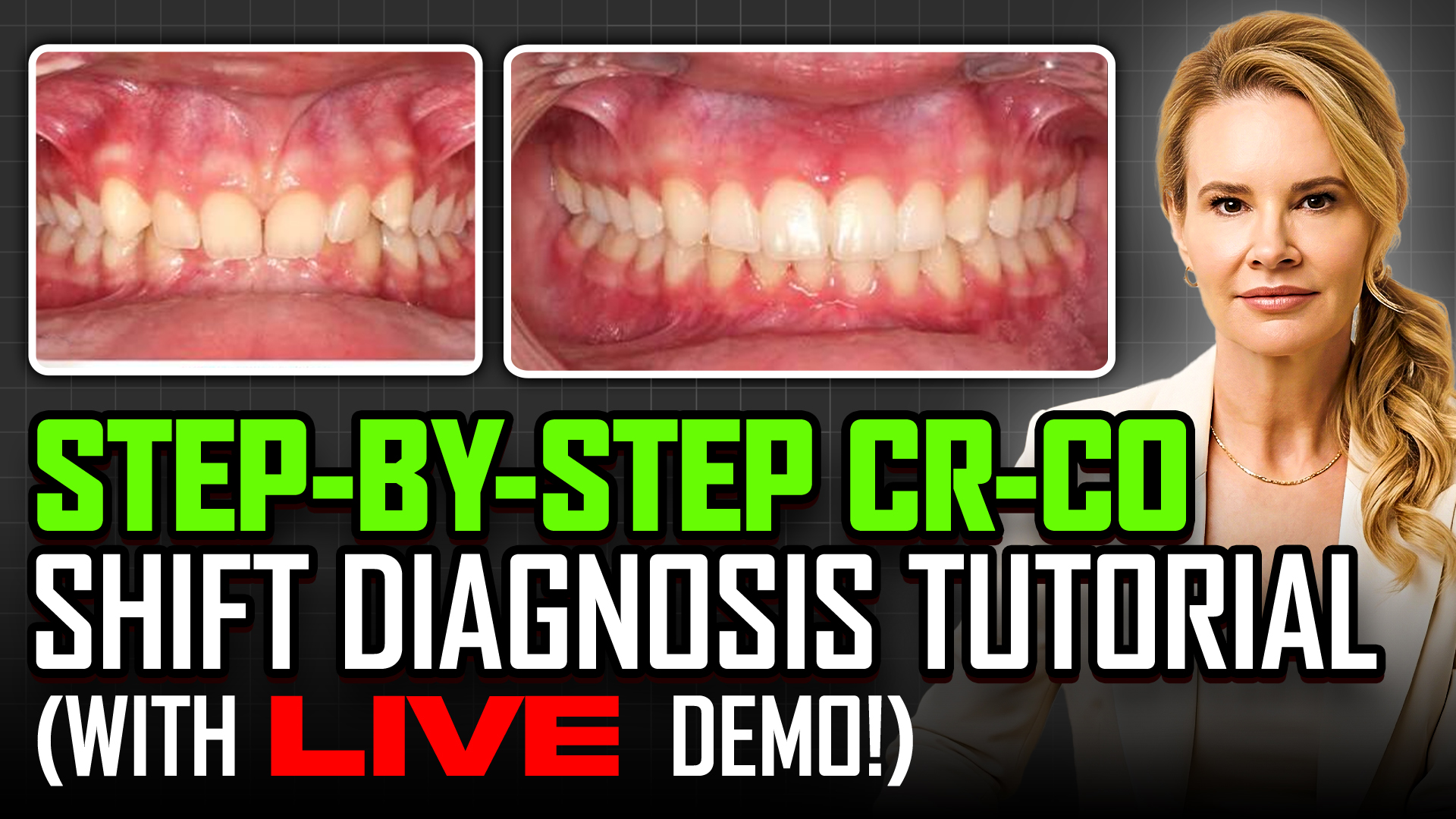
 Diagnosing CR-CO Functional Shifts in Orthodontic Patients
Properly identifying a centric relation to centric occlusion functional shift is one of the most critical steps in planning accurate orthodontic treatment. When a patient presents with an interference, their jaw naturally shifts to find a comfortable chewing position. In class three patients, an edge-to-edge bite can trigger a forward shift that mimics a severe underbite. Failing to catch this shift can lead to major clinical errors, such as over-treating the patient with unnecessary jaw surgeries or extractions when simple interproximal reduction would have sufficed.
Furthermore, taking cephalometric radiographs in centric occlusion instead of centric relation will yield inaccurate numbers, compromising the entire treatment foundation.The risk is equally high for class two patients, though it often manifests differently. These patients may naturally slide their jaw forward due to muscle memory from elastics or functional appliances. Some younger patients even intentionally slide forward to trick the clinician into thinking their treatment is finished so they can get their appliances removed.
If you accept this “Sunday bite” as a true correction, the class two relationship will seemingly reappear weeks later. This is not a true relapse, but rather an uncorrected bite that was misdiagnosed.To prevent these errors, clinicians can guide young children by instructing them to make their jaw feel like jello. For older patients, a highly effective technique involves using Myospots to accurately guide the jaw. By placing one of these specialized lozenges as far back on the roof of the mouth as comfortable, you give the patient a precise target for the tip of their tongue. Once the tongue is held firmly against the spot, instruct the patient to close their jaw until they feel the very first point of contact. This technique effectively prevents the jaw from sliding, allowing you to accurately evaluate the true baseline bite, take reliable records, and build a safe, stable orthodontic plan.