
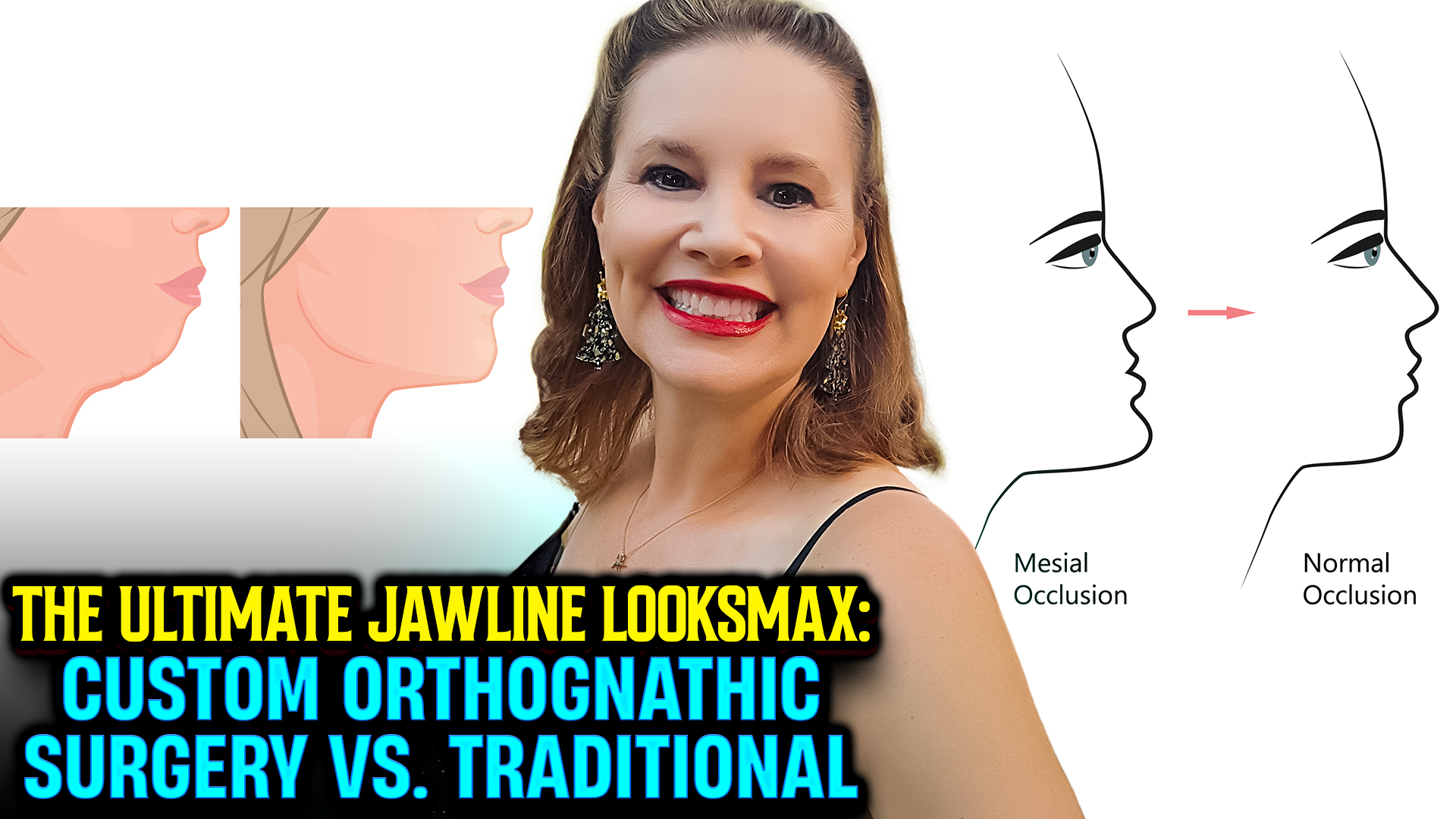
 Custom vs. Traditional Orthognathic Jaw Surgery: A Guide for Dental ProfessionalsT
he dental industry is experiencing a massive paradigm shift. Between shifting clinical perspectives on Reddit, public blogs, and the explosion of myofunctional therapy (OMT), patients and practitioners alike are looking more closely at how we correct severe jaw discrepancies. The biggest conversation right now surrounds custom orthognathic surgery versus traditional orthognathic surgery.Traditional orthognathic surgery relies on standard diagnostic models, digital tracings, and stock cephalometric norms. Patients generally undergo two to three years of decompensation using traditional braces or Invisalign before they are ready for the operating room. During the procedure, the oral surgeon uses stock titanium plates, which must be manually bent during surgery to fit the patient’s anatomy. Treating strictly to “cephalometric norms” can leave some patients with flat-looking facial aesthetics, and the multi-year timeline frequently causes severe patient burnout.Custom orthognathic surgery shifts the focus from rigid mathematical norms to a completely face-focused setup. Because the movements are mapped out ahead of time with immense digital accuracy, clinicians can often execute the surgery much earlier in the timeline—sometimes before braces or aligners are even placed. This workflow utilizes 100% patient-specific, 3D-printed guides and pre-printed metal or plastic plates. The surgeon skips the guesswork of bending plates mid-operation. This level of customization delivers drastically superior cosmetic and structural outcomes.While custom jaw surgery yields incredible outcomes, the financial and administrative structures require careful management from the provider side. Custom surgery takes 5 to 10 times more doctor planning time. While traditional orthodontic fees range from $6,000 to $9,000, custom cases range from $8,000 to $12,000, plus an additional $3,000 to $4,000 for separate lab hardware fees. Because insurance rarely covers premium 3D-printed hardware, parents face high out-of-pocket costs. Charging a substantial upfront planning fee helps mitigate financial risk and prevents the clinical damage caused by aborted or cancelled surgical cases.