
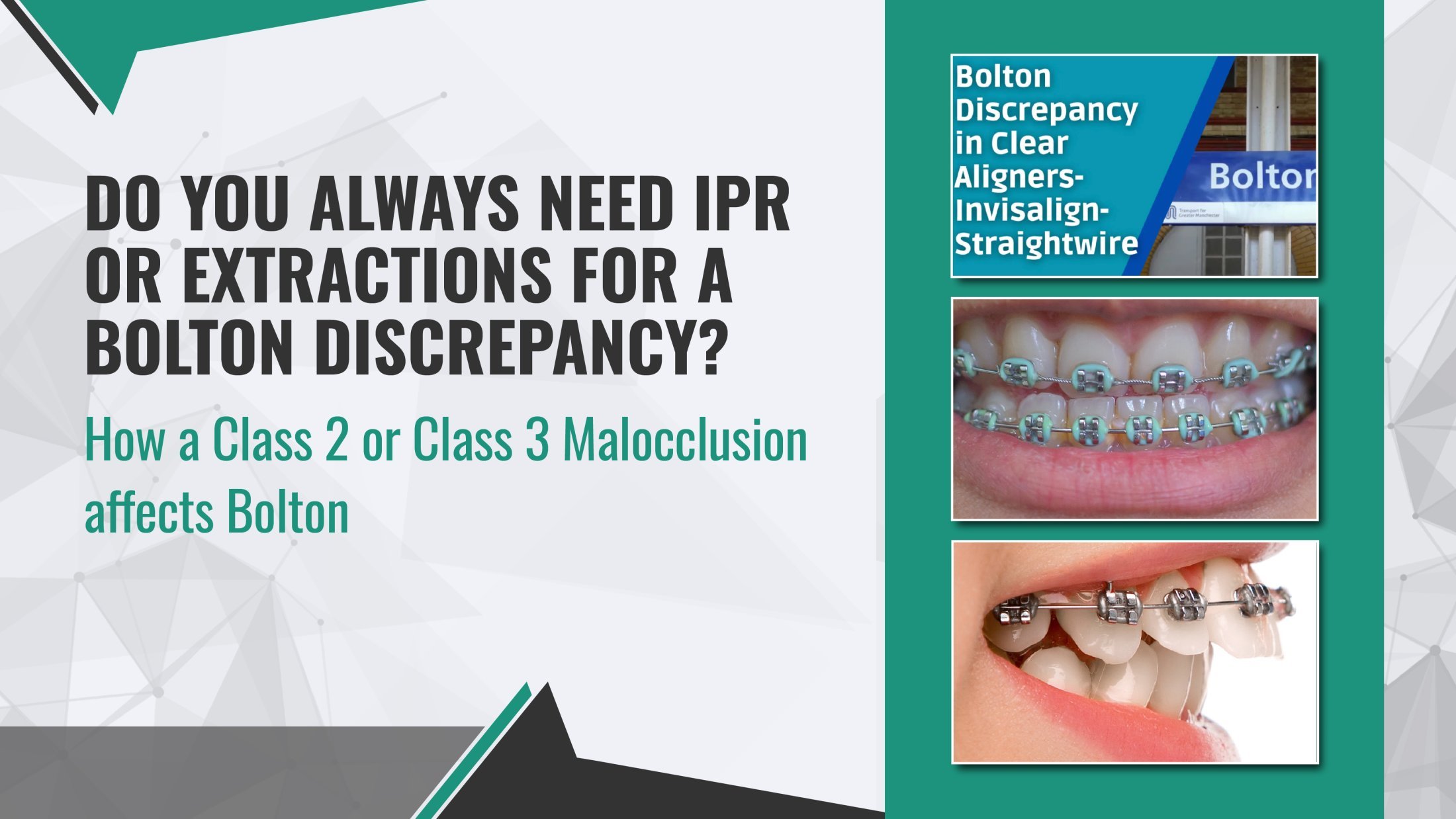
I. Introduction
A. Opening statement about Straight Smile Solution
B. Mention the upcoming webinar on January 18, 2024, sponsored by DSN DSi
C. Encouragement to watch previous videos on Bolton for foundational knowledge
II. Understanding Bolton Discrepancies
A. Brief recap of Bolton and its basics
B. Differentiating between Class One, Class Two, and Class Three malocclusions
1. Focus on mild cases (1-1.5mm) for Class Two and Three
III. Mild Class Two Cases
A. Maxillary Bolton in Class Two
1. Increased overjet due to Bolton discrepancy
2. Solution: Finish the case as Class One, possibly using elastics or posterior IPR
B. Mandibular Bolton in Class Two
1. Balanced situation; typically, no intervention needed
2. Mention of potential minimal IPR or overjet adjustments
IV. Mild Class Three Cases
A. Maxillary Bolton in Class Three
1. Positive scenario: Bolton discrepancy complements the Class Three malocclusion
2. Minor adjustments, possibly IPR, to achieve optimal outcome
B. Mandibular Bolton in Class Three
1. Challenge: Overlapping issues with both Bolton discrepancy and Class Three malocclusion
2. Possible solutions involving extraction, distalization, and strategic tooth build-up
3. Emphasis on early detection for effective treatment planning
V. Using Clear Pilot for Bolton Calculation
A. Reference to a future video on accessing Clear Correct Bolton from Clear Pilot
B. Positive feedback on Clear Pilot’s accuracy and ease of understanding
C. Encouragement to use aligner technology for treatment visualization, even in potential braces cases
VI. Conclusion
Dr. Amanda from Straight Smile Solutions provides valuable insights into the complexities of Bolton discrepancies, particularly in aligners or braces for mild class two or class three malocclusions. Her advanced lecture sheds light on the nuanced options for addressing these cases. Dr. Amanda emphasizes the importance of understanding how Bolton discrepancies impact treatment outcomes and highlights practical solutions for achieving optimal results. Dentists and orthodontic professionals can benefit from her expertise, making informed decisions in their practice.