
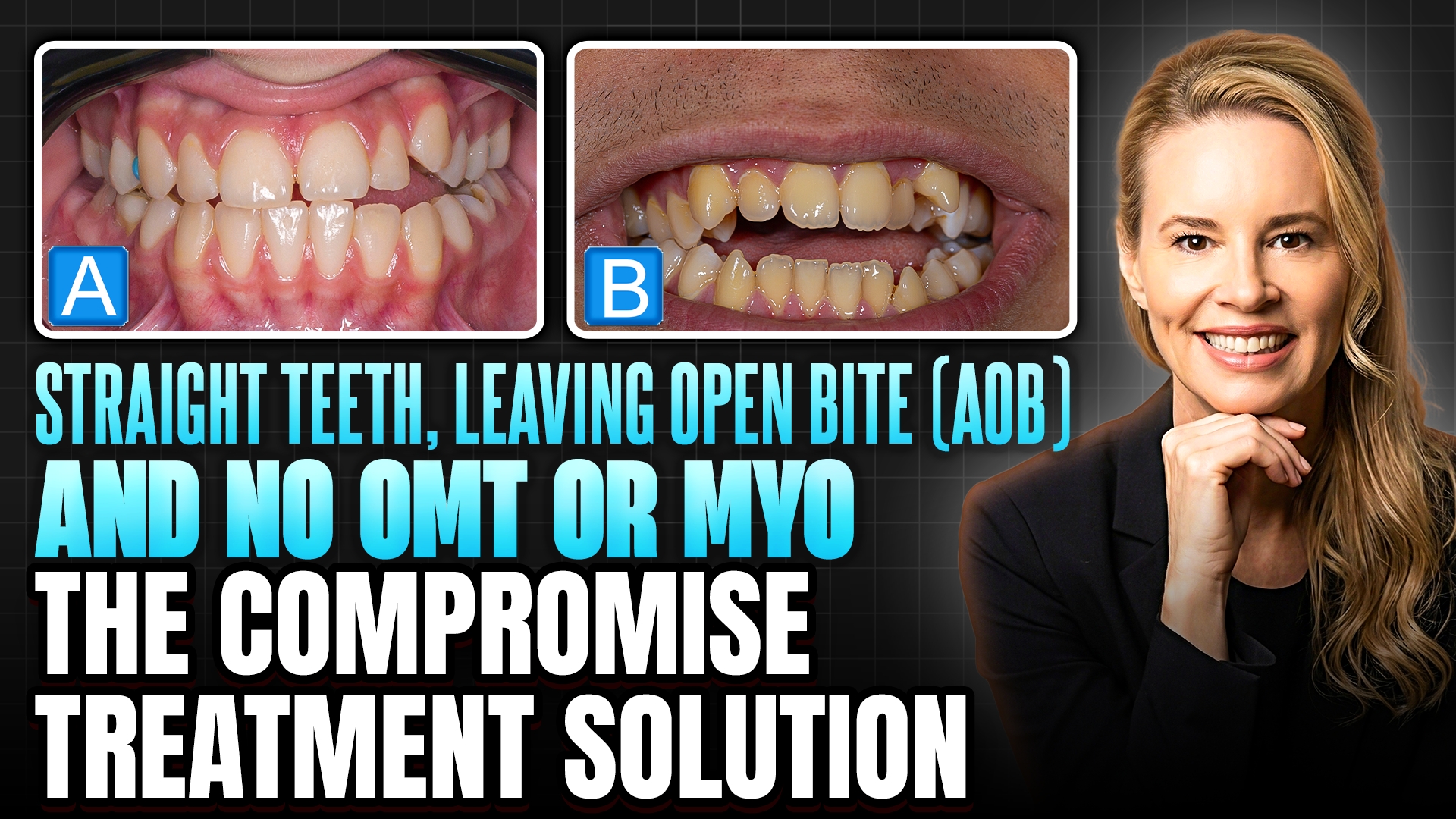
Adult patients with an anterior open bite (AOB) frequently demand a dangerous shortcut: “Just give me straight teeth and leave my bite alone!” While clear aligners make this biomechanically possible, treating a compromised adult AOB case without a myofunctional therapy (myo) release is playing Russian roulette with your dental license.The Hidden Trap of Compromised OrthodonticsLeveling crowded teeth in traditional braces causes serious flaring, actively worsening the open bite. While Invisalign or ClearCorrect offers superior vertical control, you will still likely finish with a 1.5mm residual AOB. Patients always claim they won’t mind, but once treatment ends, reality sets in. They cannot bite into a sandwich, they develop speech issues, and they quickly forget they signed up for a compromised result. When functional problems appear, they will run to another doctor who says you butchered them, sparking a formal board complaint.Protecting Your LiabilityTo avoid a catastrophic malpractice issue from a disgruntled patient, follow these non-negotiable rules:Identify the underlying etiology like tongue thrust, airway issues, or aggressive nail-biting.Force the patient to get a baseline myologist evaluation and sleep assessment first.Never accept insurance for a compromised case because these must strictly be cash-pay.Draft a ruthless, custom informed consent form outlining every functional risk.If a complex skeletal case refuses a CBCT scan or jaw surgery discussion, do not risk your clinical reputation. Simply walk away from the case.Conclusion: Protect Your License FirstAt the end of the day, a patient’s aesthetic desire should never compromise your medical judgment. Fulfilling a risky request for quick, straight teeth can turn into a legal nightmare if their function suffers. Protect your dental practice by setting firm clinical boundaries, demanding myofunctional collaboration, and ensuring your liability paperwork is completely airtight before beginning any compromised adult treatment.